


Description
The Coin
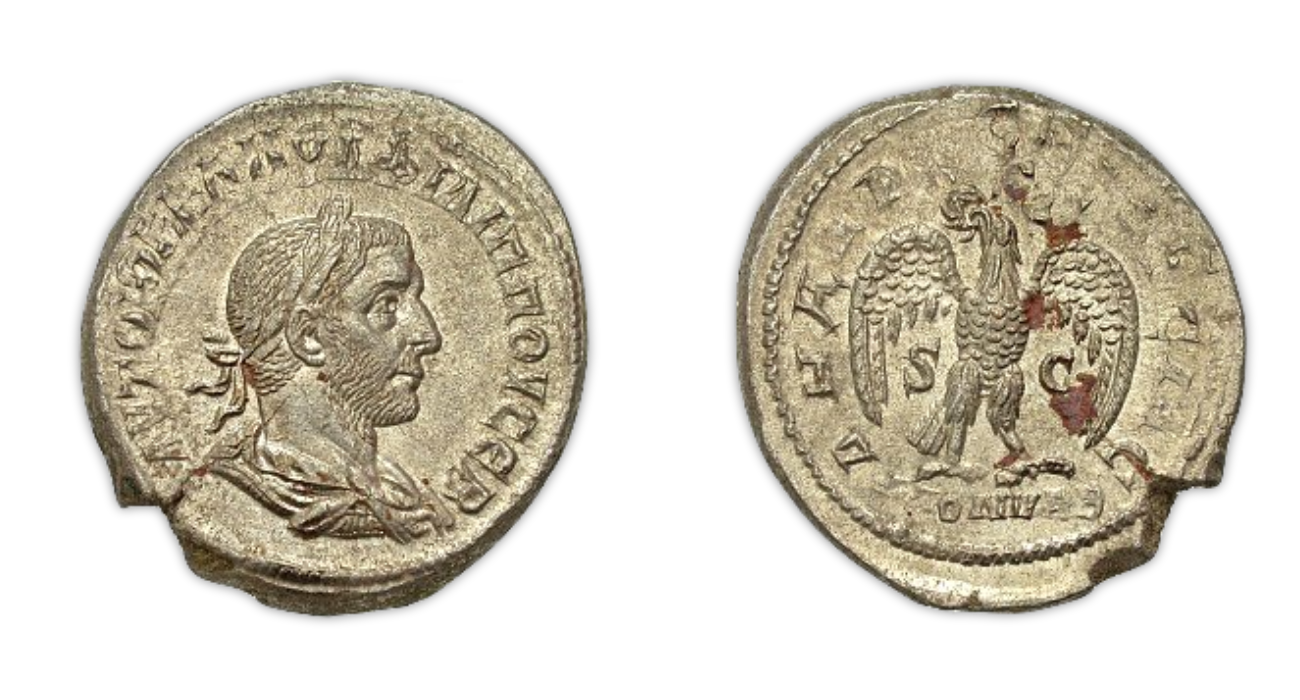
Philip I (244-249 CE), Syria – Antioch.
Silver tetradrachm.
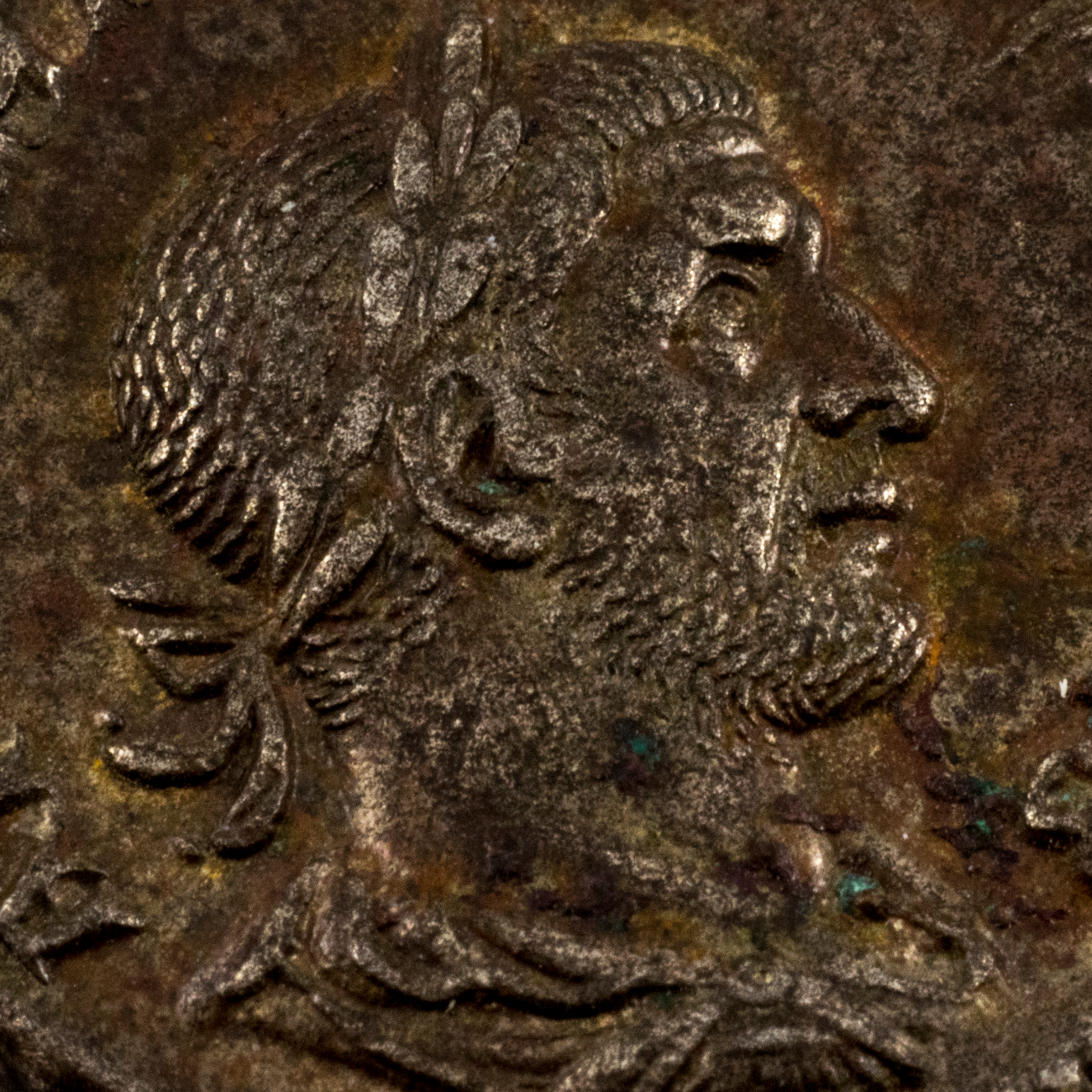
Obv: Laureate bust
Rev: Eagle standing facing head, holding wreaths in beak.
Philip I
The coin is from Antioch, a city in Syria near the Mediterranean Sea, during the rule of Roman Emperor Philip I, between 244-249 AD. The coin is a tetradrachm, meaning that its value is worth 4 drachms, a Greek coin denomination. One drachma is worth roughly the wage of one day for a worker. The front side depicts a laureate, someone who has been honored with a laurel for a victory in athletics or poetry. The laurel is made of twigs and leaves and its significance comes from Apollo wearing a laurel in Greek mythology. The back of the coin features an eagle with a wreath in its mouth. The “S” and the “C” on the coin stand for senatus consulto, by decree of the senate. In the exergue, the lower part of the coin, there is the abbreviation “MON VRB,” which stands for moneta urbis, or money of the city, which is Rome. The coin is made of billon, which is made of copper alloy with a silver coating. During this time period almost all coins were made of billon.
The eagle, which is on the back of the coin, is significant in American culture as well as Roman culture. In Roman times, the eagle was a symbol of the military. Under consul Gaius Marius, the Romans instituted the use aquilae, military standards with a silver eagle on top. A standard bearer (aquilifer) carries the aquilae into battle to keep the soldiers organized. The eagle also held religious significance as the bird of Jupiter, the most powerful of the all the Roman gods, and thus the eagle held great importance for the Romans. The eagle is also the national bird of the US, chosen in 1776 for its long life span, noble appearance, because it was at the time thought to live solely in North America, and because it was established by the Romans as a symbol of government since Gaius Marius’s use of the aquilae.
Philip I, under whose reign the coin was made, is best known for his possible conversion to Christianity. He is rumoured to have converted to Christianity and attended an Easter mass in Antioch, coincidentally the city where the coin was made. However, it is unlikely that Philip I actually converted to Christianity, since he did not bring about any change to the treatment of Christians in Rome. There are also conflicting stories about Philip’s rise to power; Some say that he played a major role in murdering his predecessor, Gordian III, while others deny that he was involved in Gordian’s death.
The coin is from Antioch, an ancient city 17 km from the Mediterranean Sea in modern day Turkey. Because of its favorable location, Antioch was a center for trade for Greeks and Asians. Antioch had a strict gridiron plan that was started at its founded and was kept even as the city grew. Many natural disasters, including several earthquakes, afflicted Antioch. However, sometimes with the help of Roman emperors, such as Caligula and Trajan, the city was repeatedly built back up.
Original Collection at Belmont Hill School