


Description
The Coin
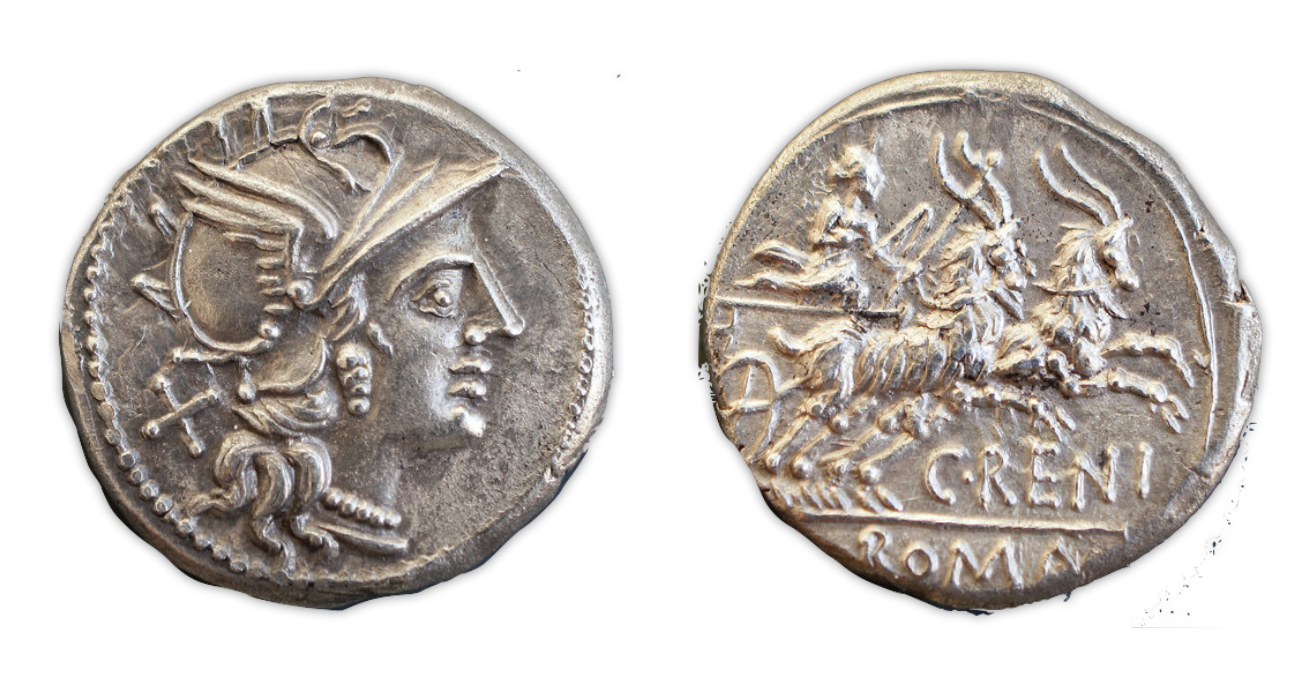
C. Renius (c. 138 BCE).
Denarius
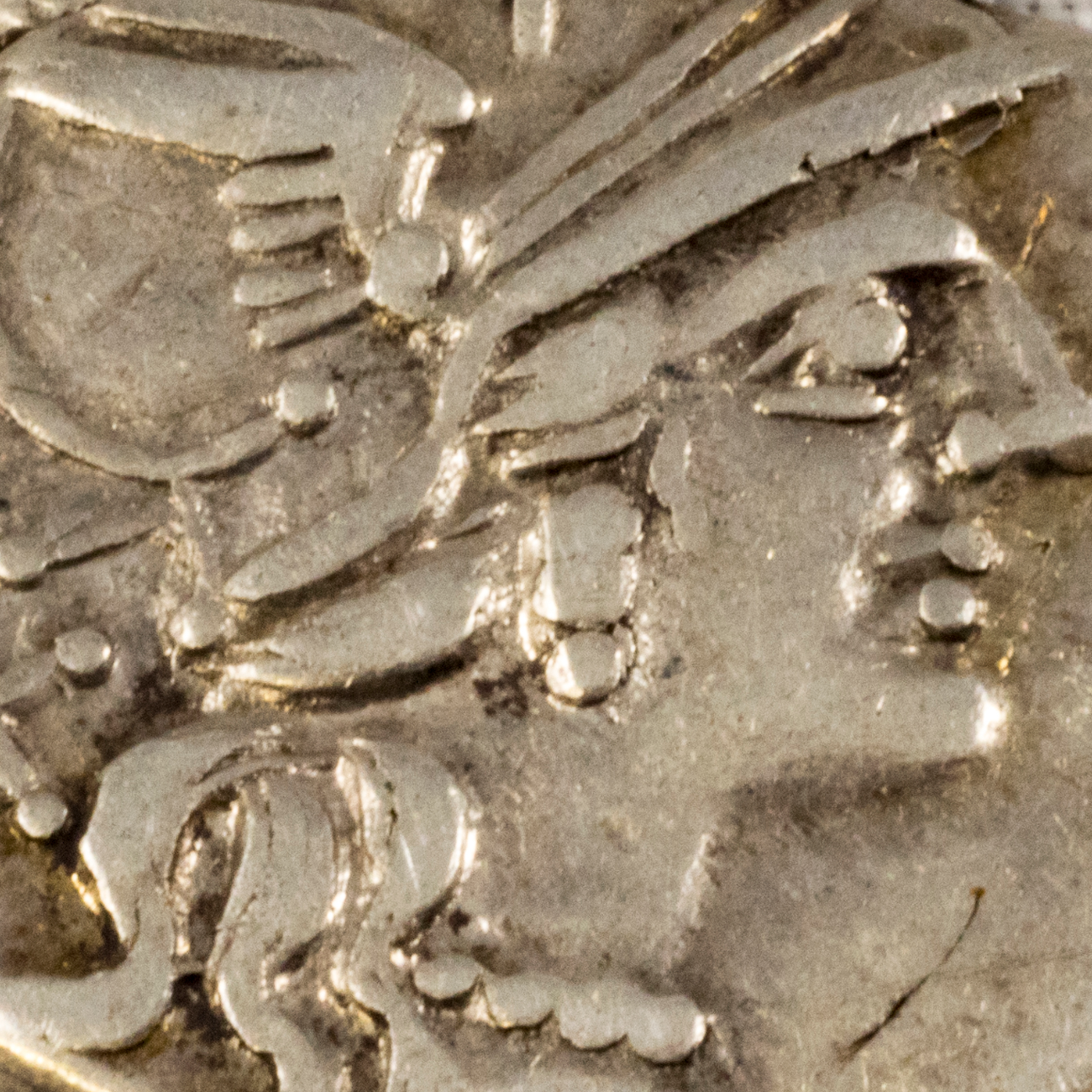
Obv: Head of Roma right, X
Rev: Juno Caprotina in biga of goats right, C. Reni below goats, Roma in CY.
C. Renius
This Roman coin dates back to 138 BCE, or year 616 Ab Urbe Condita, at which time Publius Cornelius Scipio Nasica Serapio and Decimus Junius Brutus Callaicus held the consulship. Interestingly, five years after his consulship and in the same year as his Pontifex Maximus term, an outraged Nasica, on behalf of his aristocratic optimates, assassinated the ancient Roman populist and land reformist Tiberius Gracchus. Therefore, Nasica can be credited for starting a wave of bloodshed in Roman politics which ultimately ended in the downfall of the Republic and rise of the Empire.
The coin itself, made of silver, weighs approximately 4 grams and would have had the value of one denarius. In 138 BCE, legionary soldiers earned 112.5 denarii per year, amounting to 0.3 per day, and this wage was later doubled by Julius Caesar. The word deni in Latin means “containing ten”, and the Roman numeral “X” to the left of the head on the coin stands for ten, since a denarius is worth ten asses, a cast bronze coin. On the obverse, or front, side is a personification of Roma. Cities in ancient times were represented as women, with the word Roma being feminine, and this trend has carried on into modern times through terms like “sister city”. Her trademark winged helmet, akin to that of the god Mercury, reflects the strong pride of Roman citizens in their army and their militaristic society as a whole.
The reverse side depicts Juno, the wife of Jupiter and queen of the gods, in a chariot of goats. In her right hand she holds a sceptre, a common symbol of power among classical deities, and reins for controlling the animals. A whip is seen in her left hand, which serves the purpose of spurring the goats. The exergue, the place on a coin below the principal illustration, usually for inscriptions, reads “C RENI”, with “ROMA” below. This reveals the name of the moneyer, Caius Renius, someone only recognized because of this coin and not from any significant political or military position. In fact, the gens Renia was probably an unknown plebeian family, with no record of any high officeholder of said name. Caius (or Gaius) Renius, most likely a plebeian, would have been a familiar name, though, simply because of his distinct marking on a common coin of ancient Rome.
This seemingly irrelevant addition reveals much about the economy, and institutions, of the Roman Republic. Whereas modern America employs the United States Mint, an independent agency under the government, to overrun the minting of coins, ancient Rome offered this enterprise to a group of three men, of whom Caius (or Gaius) Renius was one. These principal moneyers were called the triumviri monetalis, since they worked in the Roman mint at the Temple of Juno Moneta, or “Juno the Advisor”, derived from the Latin verb moneo. Not only might this have contributed to Juno’s placement on the reverse side of the denarius, but her epithet moneta, though it has no direct relation to currency, consequently became the root of the English words “money” and “mint”.
Original Collection at Belmont Hill School